

Walk-in guests make up a large share of many restaurants’ business. They arrive without a reservation, bring spontaneity to the dining room, and often leave without a trace in your CRM. This presents a challenge for restaurant owners and managers: how do you capture their data and put it to work?
Why is it Important?
Understanding your walk-in guests matters for several reasons. It enables personalized service, improves customer satisfaction and ultimately boosts your restaurant’s revenue. By capturing guest data, you can track dining preferences, visit frequency and spending habits, and use them to shape your marketing and operations. The result is a tailored dining experience that turns first-time visitors into loyal guests.
Capturing guest data isn’t only about the dining experience. It’s about building a relationship with your guests that goes beyond the meal they had in your restaurant.
6 Ways to Collect Data from Walk-in Guests
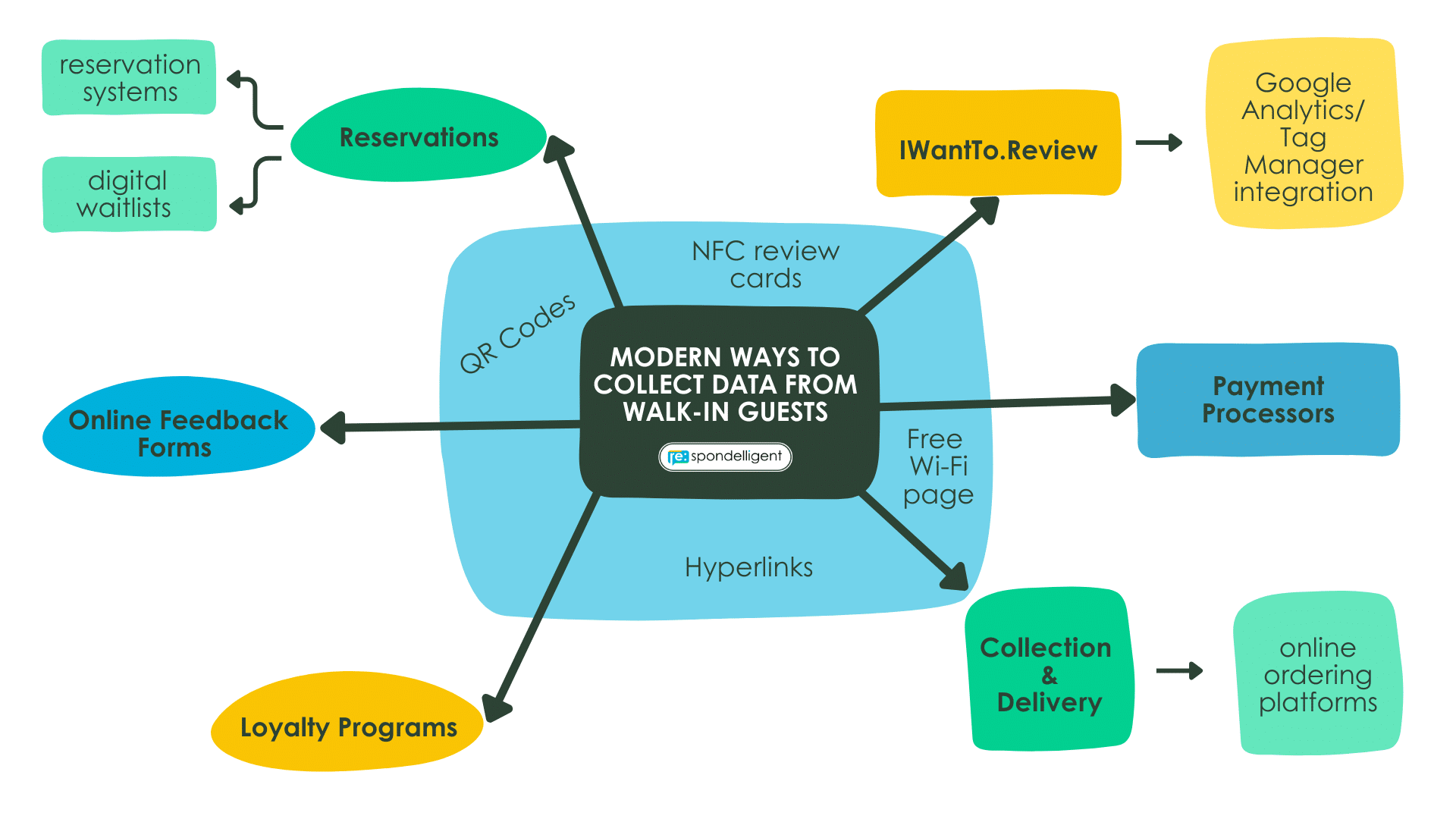
1. Reservations and digital waitlists: While reservations naturally allow for data collection, walk-in guests can also be encouraged to provide their information through digital waitlists and reservation systems. Reservation systems like aleno collect guest information such as names, contact details and dining preferences, providing a wealth of data for personalized service.
2. QR Codes: Place QR codes on tables, menus or receipts to lead guests to a feedback form or loyalty sign-up. Scanning takes seconds and needs no staff involvement.
3. IWantTo.Review: IWantTo.Review is particularly effective for walk-in guests. Guests scan a QR code on a table stand or printed on their receipt, for example via Lightspeed, or tap an NFC card, and land on your IWantTo.Review page, where every guest can leave a public review or share feedback privately. Through the Google Analytics and Google Tag Manager integration, each scan is tracked, so you can build targeted audiences and run tailored campaigns on Google and Meta. UTM parameters show which channel, location or campaign brings the most reviews.
Learn more about the opportunities with IWantTo.Review
4. Loyalty Programs: Encourage guests to join loyalty programs by offering rewards or discounts, allowing you to collect contact information and track their dining habits over time. With the Leat integration, guests who share feedback via IWantTo.Review receive a digital voucher, and their email address goes straight into your CRM.
5. Pickup & Delivery: Online ordering platforms capture contact details at checkout, growing your database with every order.
6. Payment Processors: Modern payment systems can collect email addresses or phone numbers for digital receipts, another touchpoint for data capture.
Data protection: what to keep in mind
Collecting guest data in Switzerland and the EU means following the EU General Data Protection Regulation (GDPR) and the Swiss Data Protection Act. In practice:
- Ask for consent before using contact details for marketing, and make it easy to unsubscribe.
- Tell guests what you collect and why, for example in a short privacy notice linked from your form or QR page.
- Collect only what you need and store it securely.
- If you use a feedback or review tool, check that it complies with both. IWantTo.Review, for example, is built to comply with the GDPR and the Swiss Data Protection Act. Read more in our FAQ.
Leveraging Guest Data
Restaurant analytics is a powerful tool for understanding and catering to your guests’ needs, driving both satisfaction and profitability. Once collected, guest data shows its value in how you use it to grow your restaurant. It offers deep insights into guest behavior, menu preferences and peak dining times, among others.
- Personalized marketing: Use the data to send targeted promotions, birthday or anniversary offers, and personalized recommendations based on past orders.
- Operational adjustments: Analyze trends in dining preferences and times to optimize your staffing and inventory, reducing waste and increasing efficiency. Understanding popular dishes or dietary preferences can guide menu development, so you cater to the tastes of your guests.
- Feedback analysis: Collecting and acting on feedback can significantly enhance the dining experience, turn potential negatives into positives and build guest loyalty.
Personalized experiences, targeted marketing and operational improvements based on guest data enhance satisfaction and drive business growth. The key to turning walk-in guests into loyal guests lies in understanding them through the data they share.
FAQ
What kind of data can I collect from walk-in guests and how can I use it?
Names, email addresses, phone numbers, visit times, dining preferences and feedback. Use them for personalized offers, to plan staff and menus, and to fix recurring issues.
How can I collect guest data without a reservation?
Use QR codes on tables or receipts, digital waitlists, loyalty sign-ups and digital receipts. Feedback tools can turn a scan into a known contact automatically.
Do I need consent to use guest data for marketing?
Yes. Under the GDPR and the Swiss Data Protection Act, guests must agree before you send them marketing, and they need to be able to unsubscribe at any time.
Can collecting guest data help me get more reviews?
Yes. When guests scan a QR code after their visit, you can invite every guest to leave a review and capture their contact details in the same step.


0 Comments